
The case study reports a third-party analysis of operational data on a EPTA KW CO₂ transcritical rack equipped with FTE technology at Lunds & Byerlys St. Paul (MN).
Data have been collected by Minnesota’s Center for Energy and Environment (CEE) from autumn 2022 till October 2023, and the system was switched back and forth between FTE-active and FTE-deactivated modes a few times during the first year of operation.
The data shows clear efficiency gains when the FTE system is active compared to standard booster cycle system.
- ECO2Large pack
- FTE 2.0 technology
- MT design load 150 kW
- LT design load 30 kW
- Store surface: 3000 m2
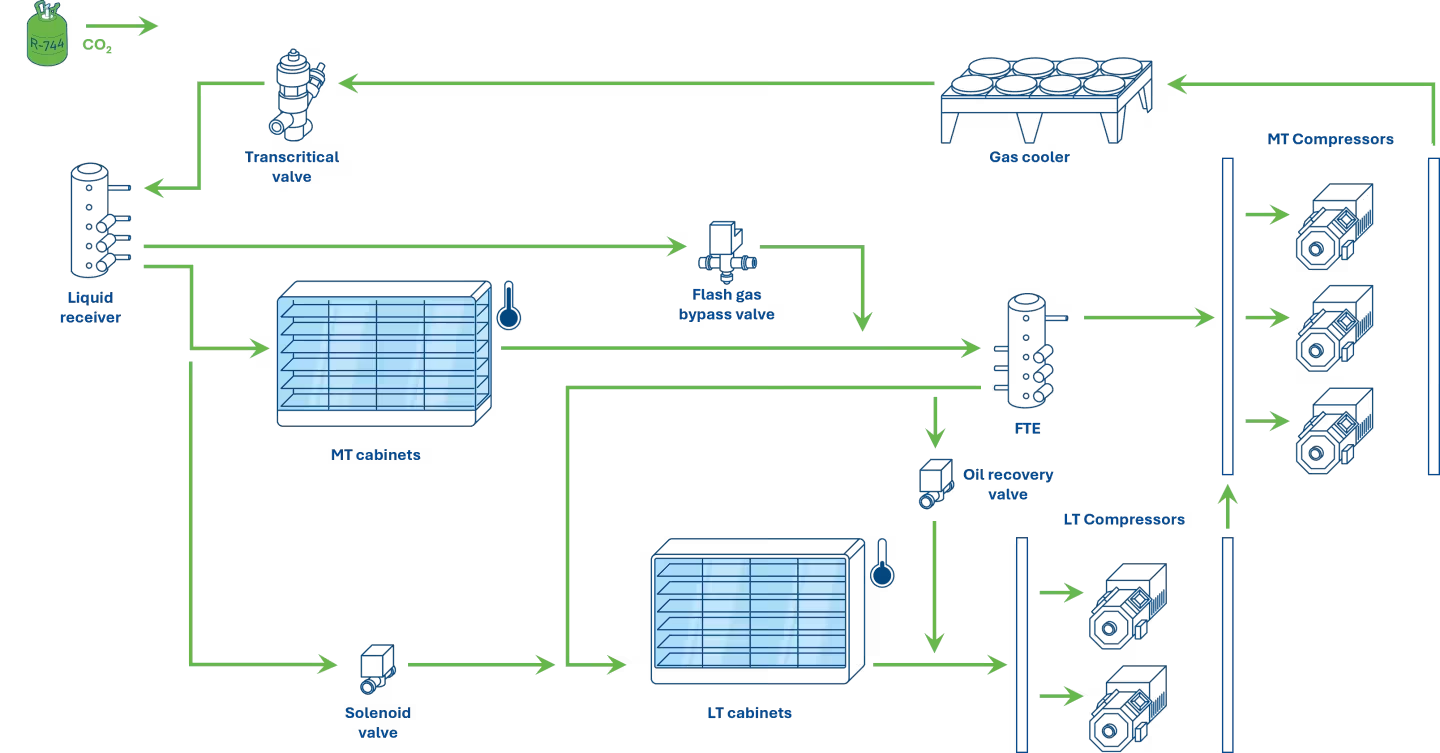
The customer selected the EPTA KW FTE technology for a couple of reasons.
First of all, FTE was a top option for consideration because of its relative simplicity compared to other technology options, like ejectors and parallel compression.
A second consideration that set FTE apart is that it provides significant energy savings year-round while most system level efficiency options for booster CO2 systems primarily provide savings in hot weather only.
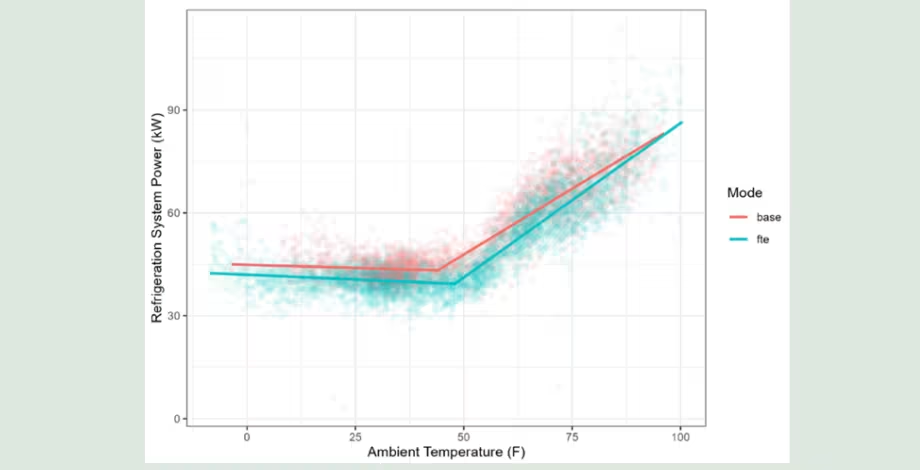
The dots represent individual short-term average values while the lines are regression models that were fit to the observed data.
The baseline data and regression model (without the FTE active) is red while the FTE-active data is green.
Applying the regression models to typical meteorological year data shows that operation of the FTE technology provided annual energy savings at a level of 7.9% of the rack and gas cooler energy use.
Utility system summer peak demand savings was lower at 2.2%. For this store, the percent savings translate to 35,395 kwh per year, or about $3,900 per year based on typical electric rates in Minnesota.